Nanomaterials and its role in future....

Nanomaterials are materials that have at least one dimension in the nanometer scale (1-100 nanometers). Due to their small size, they exhibit unique physical, chemical, and biological properties that differ significantly from those of bulk materials.

Types of Nanomaterials

1.) Carbon based nanomaterials:

    • Graphene: A single layer of carbon atoms arranged in a two-dimensional lattice, known for its exceptional strength and electrical conductivity.
    • Carbon Nanotubes (CNTs): Cylindrical nanostructures with remarkable strength, electrical conductivity and thermal conductivity.

 Various carbon-based nanomaterials were ...

2.) Metal-Based Nanomaterials:

These consist of metal nanoparticles (NPs) or nanostructures.

  • Metal Nanoparticles: Made from metals like gold, silver, platinum, or copper. They are used in catalysis, medicine, and sensing due to their unique optical and chemical properties.
  • Metal Oxide Nanoparticles: Common examples include zinc oxide (ZnO), titanium dioxide (TiO2), and iron oxide (Fe3O4) nanoparticles. These are used in sunscreens, paints, sensors, and environmental applications.
  • Quantum Dots: Semiconductor nanoparticles (e.g., cadmium selenide or cadmium telluride) that exhibit unique optical properties such as size-dependent light emission.Example of metal nanoparticles ...

    3.) Dendrimers:

    These are highly branched, tree-like polymeric nanostructures.

  • Polymeric Nanomaterials: Dendrimers can be tailored for specific applications like drug delivery, where their structure allows the attachment of therapeutic agents at their ends.Dendrimer - Wikipedia

    4.) Polymeric Nanomaterials:

    Nanomaterials made from organic polymers.

  • Nanocapsules: Nanoscale capsules used for controlled drug delivery.
  • Nanogels: Swollen, water-containing polymer networks that can be used in drug delivery or as scaffolds in tissue engineering.
  • polymeric nanoparticles ...

    5.) Composite Nanomaterials:

  • Core-Shell Nanoparticles: These consist of a core material surrounded by a shell material. The core and shell can be made from different materials (e.g., metals, semiconductors, polymers) to create multifunctional properties.
  • Nanocomposites: Materials made by combining nanoparticles with bulk materials to improve or impart specific properties, such as mechanical strength, electrical conductivity, or thermal stability.Nanocomposite Materials | IntechOpen

    6.) Two-Dimensional (2D) Nanomaterials:

  • Graphene and Derivatives: Beyond graphene, other 2D materials like graphene oxide and reduced graphene oxide have unique electrical, mechanical, and thermal properties.
  • Transition Metal Dichalcogenides (TMDs): 2D materials like molybdenum disulfide (MoS₂) that exhibit interesting electronic, optical, and catalytic properties.
  • MXenes: 2D materials made from transition metal carbides or nitrides, showing promise in energy storage and sensing applicationsTwo-Dimensional Nanomaterials ...

    7.) Biological Nanomaterials:

  • Liposomes: Nanoscale lipid vesicles used for drug delivery, particularly in targeted therapies.
  • Nanocellulose: Nanoscale cellulose fibers extracted from plant matter, used in applications ranging from lightweight materials to electronics.
  • Protein-Based Nanomaterials: Protein molecules engineered or synthesized at the nanoscale for use in medical and biotechnological applications, such as drug delivery and biosensing.DNA nanomaterials ...

    Magnetic Nanomaterials:

  • Magnetic Nanoparticles: Nanoparticles made from magnetic materials (e.g., iron oxide) with applications in data storage, medical imaging (MRI contrast agents), and targeted drug delivery.
  • Ferrofluids: Liquids that become magnetized in the presence of a magnetic field, often used in sealants, medical devices, and electronic cooling.
  • Nanowires and Nanorods:

  • Nanowires: Wire-like structures with diameters in the nanometer range but lengths in the micrometer range. Common materials include silicon, gold, and silver, with applications in electronics, sensors, and energy harvesting.
  • Nanorods: Similar to nanowires but shorter and thicker, nanorods are used in applications such as drug delivery, photonics, and catalysis.Nanorod - Wikipedia       NANORODS
  • TiO2 Nanowires | Nanowire Series | ACS ...     NANOWIRES


    Why nanomaterials?

            Unique Physical and Chemical Properties:

    • Size-dependent properties: At the nanoscale, materials can exhibit drastically different properties compared to their bulk counterparts. For example, nanoparticles can have enhanced optical, magnetic, and electronic properties.
    • High surface area to volume ratio: This gives nanomaterials high reactivity and enables applications in catalysis, sensing, and energy storage.
    • Quantum effects: At the nanoscale, quantum effects start to dominate the behavior of materials, influencing their conductivity, color, and chemical reactivity.

      Sustainability and Efficiency:

    • Resource efficiency: The use of nanomaterials can reduce the amount of material needed for a particular function, thus conserving resources and lowering costs.
    • Environmental benefits: Nanomaterials can enable cleaner manufacturing processes, more efficient energy use, and better environmental sensors, contributing to sustainability.

      Wide Range of Applications:

    • Medicine: Nanomaterials are used in drug delivery systems, diagnostic tools, and tissue engineering. For example, nanoparticles can deliver drugs directly to cancer cells, improving treatment efficiency and reducing side effects.
    • Electronics: Nanomaterials, such as carbon nanotubes and graphene, are being used to develop faster, smaller, and more efficient electronic devices.
    • Energy: Nanomaterials are used in batteries, solar cells, and fuel cells to improve energy efficiency and storage capacity. They also enable the development of new materials for energy harvesting.
    • Environment: They can be used for water purification, air filtration, and in creating more efficient catalysts for reducing industrial emissions.

      Sustainability and efficiency:

    • Resource efficiency:
     The use of nanomaterials can reduce the amount of material needed for a particular function, thus conserving resources and lowering costs.
    • Environmental benefits
    • Nanomaterials can enable cleaner manufacturing processes, more efficient energy use, and better environmental sensors, contributing to sustainability.

      Innovation Potential:

    • Nanomaterials are enabling breakthroughs in various industries, from the development of stronger materials (such as nanocomposites) to advancements in wearable technology and smart materials.

      Challenges and Research Opportunities:

    • While nanomaterials hold great promise, challenges like safety, toxicity, and long-term environmental impacts still need to be addressed. This opens up vast research opportunities.

      How the role of nanomaterials is going to be in future? 

      The role of nanomaterials in the future is poised to expand dramatically across multiple sectors, transforming industries, technologies, and even our daily lives. Here's how nanomaterials are likely to play a key role in the future.

      Medicine and Healthcare:

    • Targeted Drug Delivery: Nanoparticles will increasingly be used to deliver drugs directly to diseased cells, such as cancer cells, allowing for more efficient treatments with fewer side effects. Personalized medicine, where treatments are tailored to individuals, will benefit greatly from nanomaterials.
    • Advanced Diagnostics: Nanoscale biosensors will enable faster, more accurate disease detection at earlier stages, potentially leading to breakthroughs in preventive medicine. Quantum dots and nanoparticles could revolutionize imaging technologies for more precise medical diagnostics.
    • Regenerative Medicine and Tissue Engineering: Nanomaterials can aid in tissue regeneration by providing scaffolds that support cell growth. This could pave the way for growing organs or repairing damaged tissues.Nanomedicine Market- Key Applications, Benefit, and Future Prospects

      Energy:

    • Next-generation Batteries:
    Nanomaterials, like graphene and silicon nanoparticles, will play a major role in creating more efficient and longer-lasting batteries for electric vehicles, mobile devices, and renewable energy storage. Lithium-ion batteries could be replaced by solid-state batteries enhanced with nanomaterials for better performance.
    • Solar Energy
    Nanotechnology can improve the efficiency of solar cells, making renewable energy more affordable and accessible. Nanostructured materials can be used to develop flexible, transparent, and even wearable solar panels.
    • Hydrogen Production and Fuel Cells
    Nanomaterials can act as efficient catalysts in fuel cells and hydrogen production, leading to cleaner, renewable energy solutions.Nanomaterials for advanced energy applications: Recent ...
     
    Environmental Remediation:  
     
    Due to their high reactivity and surface area, nanomaterials can be used to remove pollutants from water, air, and soil. Nanoscale catalysts can break down contaminants, while nano-adsorbents can capture heavy metals and toxins.
    • Water Purification:
    Nanomaterials, like carbon nanotubes and silver nanoparticles, have exceptional adsorption capabilities, which allow them to trap heavy metals (like lead, mercury, and cadmium) and organic pollutants in contaminated water.
    • Air Pollution Control:
    Nanomaterials are used in filters to capture and break down airborne pollutants like volatile organic compounds (VOCs) and greenhouse gases. Titanium dioxide (TiO₂) nanoparticles, for instance, act as photocatalysts; when exposed to sunlight, they can break down pollutants in the air, including nitrogen oxides, into harmless substances.
    • Soil Remediation:
    Contaminated soil can be treated using nanoparticles that immobilize or break down toxic substances, such as heavy metals and pesticides. Iron nanoparticles (nano-zero-valent iron or nZVI) are particularly effective in soil remediation because they can reduce and immobilize toxic elementsEnvironmental Remediation - Redhill Scientific


     Electronics and Computing:

    Nanomaterials enable the development of smaller, faster, and more energy-efficient electronic components. They are critical to next-gen computing technology, including quantum computers and flexible, transparent electronics.

    • Miniaturization of Components:

    Traditional electronic components are limited by silicon technology in terms of size reduction, but nanomaterials like graphene and carbon nanotubes allow for the creation of transistors and chips on an incredibly small scale.

    Miniaturisation of Electronics: RND - KnowHow

    • Improved Processing Power and Speed:

    Materials like graphene and molybdenum disulfide (MoS₂) can conduct electricity faster than silicon, which speeds up the signal transmission in electronic circuits. Graphene, for instance, can conduct electrons with minimal resistance, allowing for faster and more efficient circuits.

    How Processor Speeds Have Increased Over the Decades | by PcSite | Medium

    • Enhanced Battery Performance:

    Nanomaterials like silicon nanowires and graphene oxide are used to improve the capacity and charging speed of batteries. Silicon anodes, for instance, can store much more energy than traditional graphite anodes in lithium-ion batteries, but they suffer from expansion and cracking. 

    A review of rechargeable batteries for portable electronic devices - Liang  - 2019 - InfoMat - Wiley Online Library

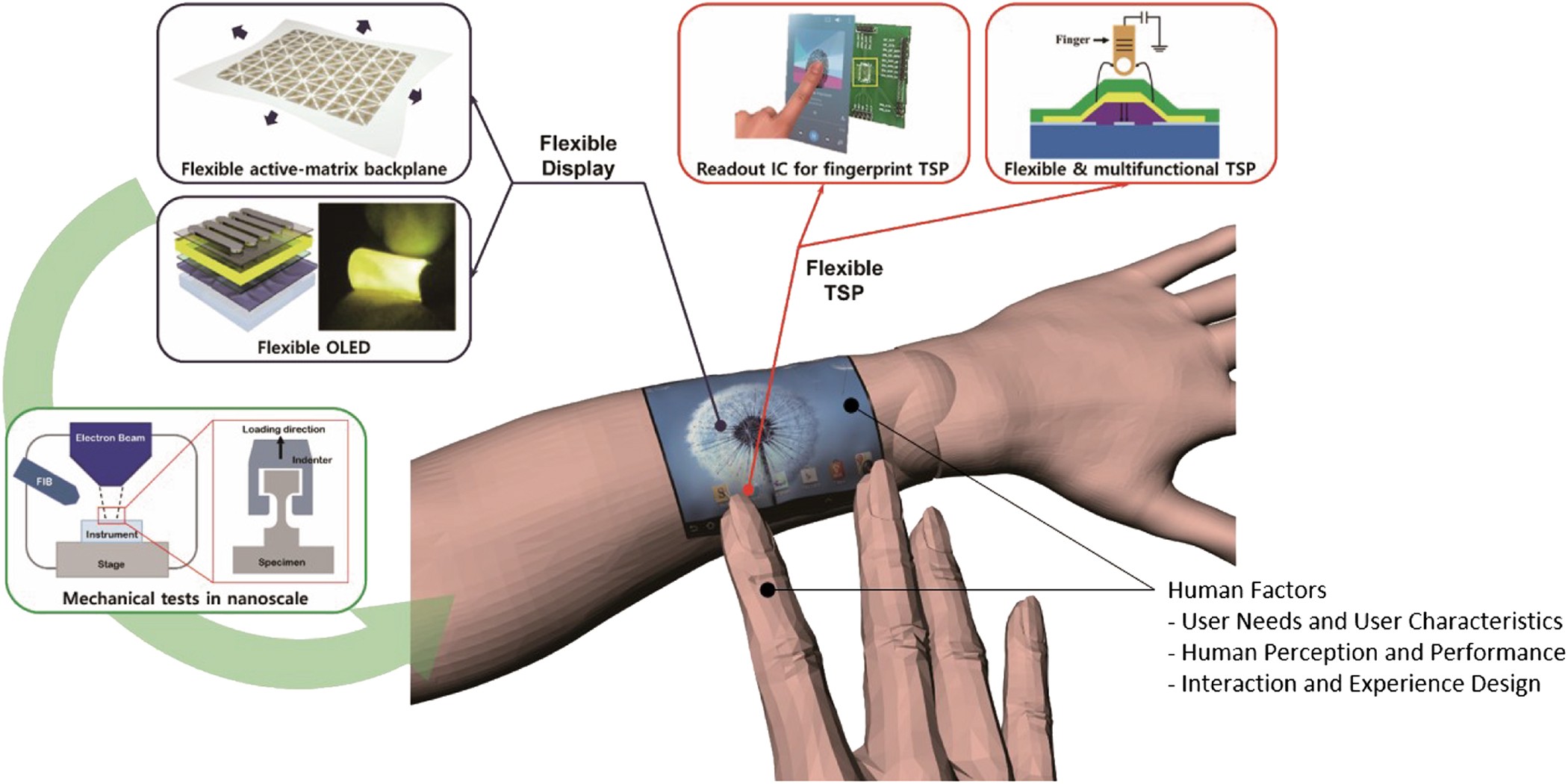
    • Flexible and Transparent Electronics:

    Transparent and flexible electronics are possible with nanomaterials like graphene, carbon nanotubes, and indium tin oxide (ITO). These materials are transparent conductors, enabling the development of bendable and lightweight screens, sensors, and circuits.

    Research on flexible display at Ulsan National Institute of Science and  Technology | npj Flexible Electronics

    High-Density Data Storage:

    Nanomaterials contribute to next-generation memory devices, such as memristors and spintronic memory, which allow for ultra-dense data storage with faster read and write speeds. Spintronics, which relies on the electron's spin instead of its charge, is made feasible by magnetic nanoparticles and magnetic nanomaterials. 

    Revolutionizing Data Storage: Quantum ...  image credits:@google.com


Comments